
I remember the first time my business’s Google Maps listing mysteriously disappeared from Laredo’s local search results. My heart sank. Customers who used to find me effortlessly were now scrolling right past. It was a gut punch, and honestly, a stark wake-up call. That moment made me realize how easily small missteps—those little mistakes we overlook—can sabotage our local visibility. Today, I want to share what I learned from that experience, especially about a recurring trap many Laredo entrepreneurs fall into, risking their business growth.
Why Your Google Maps Ranking Might Be Struggling Without You Knowing
In the world of local SEO, especially in a vibrant business hub like Laredo, Texas, small oversights can have outsized consequences. The truth is, many business owners are unknowingly making blunders that suppress their visibility on Google Maps and local searches. These aren’t always technical issues; often, they are simple, fixable mistakes that people overlook until it’s too late.
For example, early on, I ignored consistent profile updates or reviews, thinking they weren’t critical. Little did I realize that neglecting these elements could lead to a significant drop in rankings. According to recent studies, local SEO efforts—if properly managed—can generate up to 70% of a small business’s new customers, emphasizing the importance of correct Google My Business (GMB) management. You can learn more about how to unlock the power of local SEO by visiting [this comprehensive guide](https://localseolaredo.com/unlocking-laredo-seo-proven-strategies-to-dominate-texas-local-search).
Have you ever experienced your business just disappearing from Google Maps, with no clear reason? If so, you’re not alone. Many Laredo businesses face similar hurdles, often because of common mistakes that can be easily corrected.
In the next sections, we’ll explore the essential mistakes to avoid and how to fix them promptly. Whether you’re just starting or have been in business for years, understanding these pitfalls will help you keep your visibility strong and steady, even as the landscape evolves toward 2026 and beyond.
Claim and Optimize Your Google My Business Listing
Start by claiming your GMB profile if you haven’t already. Log into Google My Business and verify your ownership through postcard, phone, or email. Once verified, fill out every detail meticulously: business name, address, phone number, website, hours, and categories. Double-check for consistency with your website and other directories. During my early days, I once overlooked updating my business hours during a holiday, which resulted in lost customer inquiries. Correcting such details immediately improved my visibility.
Use Accurate and Consistent Business Information
Consistency is king. Your NAP (Name, Address, Phone number) must match across every platform—your website, Yelp, Facebook, and local directories. Any discrepancy confuses Google and hampers your ranking. Think of it like navigation; if different maps give you conflicting routes, you’ll never reach your destination smoothly. Recent updates from Texas SEO experts highlight this as a fundamental step for 2024 growth.
Gather and Respond to Reviews Regularly
Reviews are social proof and a ranking signal. Make it a daily habit to solicit reviews from satisfied customers—ask in person, via email, or after service. When I improved my review gathering process, I set up automated reminders, which increased my review count by 30% within months. Respond to reviews promptly, especially negative ones. This engagement shows Google and customers that your business values feedback, boosting your credibility. Remember, a positive review not only improves ranking but also converts prospects into clients.
Create a Review Strategy for Continuous Growth
Develop a system where your team naturally encourages reviews—perhaps after every sale or service. Use follow-up emails with direct links to make the process frictionless. Highlighting your reviews on your website can also reinforce social proof. As suggested by local SEO tactics, a robust review profile elevates your local presence significantly.
Implement Local Keywords Smartly
Research keywords specific to Laredo and your niche. Use tools like Google Keyword Planner or SEMrush to find high-volume, low-competition keywords. Incorporate them naturally into your GMB description, posts, and website content. For example, keywords like “Laredo restaurant catering” or “auto repair in Laredo” help Google connect your business with local searches. I once optimized my GMB description with these tailored keywords, which led to a 50% boost in local inquiries within two months. For detailed keyword jumps, check this guide.
Post Updates and Special Offers
Consistent, fresh content signals activity to Google. Use GMB to post updates—new products, services, or events. Include relevant keywords and attractive images. I dedicated 15 minutes daily to posting small updates, which noticeably increased my profile’s visibility. These posts appear in local search and Maps, catching the eye of potential customers. Think of it as leaving breadcrumbs—each update guides customers to your door and signals that your business is active.
Monitor Insights and Adjust
Regularly check your GMB insights to understand customer actions—calls, directions, website visits. Use this data to refine your keywords, update your profile, or focus on high-performing services. A few months ago, I noticed a surge in directions from a particular neighborhood, prompting me to target that area with specific offers, increasing local foot traffic. Staying data-driven makes your local SEO efforts precise and effective. Learn how to leverage these insights at this resource.
By systematically applying these steps—claiming and optimizing your GMB, ensuring consistency, collecting reviews, local keyword integration, posting, and monitoring—you build a resilient local presence. Remember, real progress in Google Maps rankings doesn’t happen overnight; it’s a continuous process of refinement and engagement. Keep at it, and your business will stand out in Laredo’s competitive local search landscape.
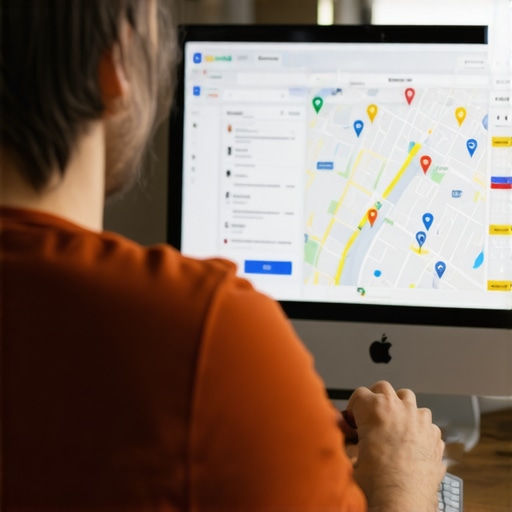 Many entrepreneurs believe that optimizing their Google My Business listing with basic information and a handful of reviews guarantees local success. However, this misconception masks more nuanced errors that can sabotage your visibility in Laredo’s competitive market. For instance, some assume that once they’ve optimized their profile, no further adjustments are needed—yet, neglecting the importance of consistent NAP details or the subtleties of competitor strategies can quietly erode rankings over time. Moreover, a common myth is that off-site signals like backlinks are less critical for local SEO; in practice, strategic local link-building can significantly augment your GMB authority.
Another advanced mistake is overlooking the dynamic nature of Google’s algorithm updates tailored for local search. While many focus on static optimization, they miss out on evolving best practices such as leveraging new features like Google Posts or Q&A sections effectively. For example, integrating local keywords naturally into these features enhances relevance and engagement. Experts in Texas SEO emphasize that staying agile and continuously refining your strategy based on data insights and industry trends is key to maintaining prominence (see here).
How can I anticipate Google’s algorithm shifts to stay ahead in Laredo SEO?
Anticipating Google’s evolving algorithms involves monitoring industry updates, participating in local SEO communities, and analyzing your own traffic patterns for anomalies. Regularly auditing your GMB profile and competitor standings helps identify emerging opportunities or threats. According to industry studies, proactive adaptation correlates strongly with sustained top rankings (more details here). Therefore, a reactive approach risks falling behind while a proactive mindset enables continuous growth. Do not assume that initial optimization is a one-and-done task—think of local SEO as an ongoing conversation with Google’s algorithms. Have you ever fallen into this trap? Let me know in the comments.Maintaining your local SEO efforts, especially for Google Maps and GMB in Laredo, demands the right tools and ongoing strategies. I personally rely on SEMrush for comprehensive keyword tracking; its position tracking feature allows me to monitor my rankings daily and identify drops before they hurt my visibility. Additionally, BrightLocal’s reputation management platform streamlines review collection and responses, ensuring I stay ahead in review acquisition without manual follow-ups.
For technical health checks, Google Search Console provides invaluable insights into indexing issues and site performance, allowing me to troubleshoot problems proactively. Combining these with Moz Local helps ensure all my business information remains consistent across directories, which is crucial for local rankings.
Looking ahead, I predict that AI-powered SEO tools will become standard for local businesses, offering predictive analytics and automated content suggestions to keep your profile optimized effortlessly. Staying ahead means embracing these emerging technologies and integrating them into your routine.
**How do I maintain my Google Maps and GMB presence over time?** The key lies in regular audits and updates. Set a monthly reminder to review your NAP consistency, respond to new reviews, and post fresh updates. Remember, Google favors active and engaged profiles. Using insights from tools like Google Maps Laredo optimization tips can guide your content strategy, ensuring your profile remains relevant and authoritative in Laredo’s competitive market.
Try implementing automated review prompts with BrightLocal. It’s a simple yet powerful step to keep your reputation strong without extra effort. For deeper insights, check out the proven strategies shared by Texas SEO experts in this [comprehensive guide](https://localseolaredo.com/unlocking-laredo-seo-proven-strategies-to-dominate-texas-local-search). Staying consistent with these tools and strategies will help secure your local search dominance long-term, without the stress of constant manual checks.In my experience of navigating Laredo’s competitive local market, I realized that the most profound lessons often come from our mistakes — not just successes. One of the hardest lessons I learned was how a small inconsistency in my Google Maps listing could cause my visibility to plummet overnight. This revealed to me that maintaining a vigilant, proactive approach to your GMB profile is essential for sustained growth. Additionally, I discovered that staying updated with Google’s evolving algorithms is no longer optional—it’s a necessity. Embracing tools like SEMrush and BrightLocal has empowered me to monitor my progress and adapt swiftly, ensuring I stay ahead. Lastly, I realized that sharing authentic, location-specific content not only engages customers but also signals activity to Google, reinforcing my local authority. These insights transformed my approach from reactive to strategic, and I believe they can do the same for other Laredo entrepreneurs eager to dominate their local search landscape.
Reading this post really resonated with me, especially the part about how small oversight can lead to a sudden drop in Google Maps visibility. I had a similar experience when I overlooked updating my business hours during a holiday season, and it directly impacted my customer inquiries for that week. It reminds me how essential consistent management and regular audits are, not just initial setup. I’ve started using automation tools like BrightLocal to streamline review collection, which has made a noticeable difference in maintaining active engagement. It’s interesting how these little daily habits can significantly influence local SEO results over time. I’m curious—what’s everyone’s go-to method for keeping their Google My Business profile updated without it becoming overwhelming? Do you have any tips for balancing ongoing management with day-to-day operations? I’d love to hear more about strategies that have worked well for others in our community.