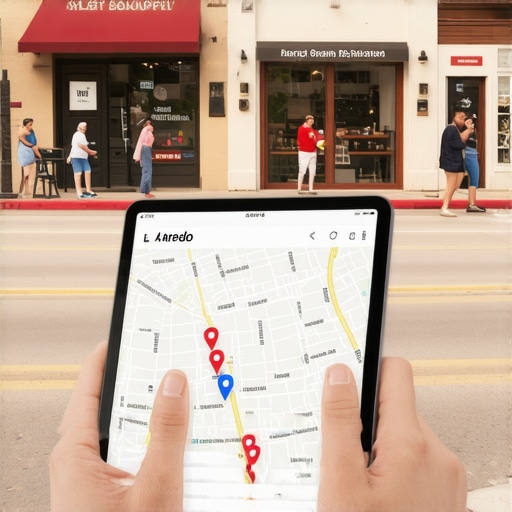
I vividly remember a morning, frustrated and exhausted, staring at my Google Maps listing with barely any visibility. I had invested so much time and effort into my local business, but my Google Maps profile seemed to be invisible to potential customers in Laredo. It was a lightbulb moment—realizing that simply claiming my listing wasn’t enough. I needed to optimize it effectively to stand out in a crowded local market.
Why Local SEO and Google Maps Optimization Matter More Than Ever
In today’s competitive landscape, having a strong online presence on Google Maps isn’t just a bonus—it’s a necessity. Recent studies show that 78% of local mobile searches result in an offline purchase (Source: Think with Google). That means if your business isn’t appearing prominently in local search results, you’re missing out on a huge chunk of potential customers. For small businesses in Laredo, this visibility can be the difference between thriving and barely surviving.
But here’s the thing—many entrepreneurs make critical mistakes early on that sabotage their local SEO efforts. I did the same. I overlooked key elements like consistent NAP (Name, Address, Phone Number) information and neglected to optimize my Google My Business (GMB) profile with relevant keywords. These mistakes cost me time and lost opportunities.
Have you faced challenges getting your business to show up on Google Maps in Laredo?
If so, you’re not alone. Many local business owners struggle to understand what truly drives visibility on Google Maps. The good news? With targeted strategies, you can turn your Google Maps listing into a powerful tool for growth. That’s exactly what I’ll share in this guide—step-by-step tips backed by proven local SEO tactics. Want to learn how to boost your visibility and attract more customers? Keep reading, because your journey to Google Maps success starts now.
Claim and Verify Your Google My Business Profile
Start by claiming your Google My Business (GMB) profile if you haven’t already. Visit this link to get assistance. Once claimed, verify your listing through the postcard, phone call, or email. Verification confirms your business’s legitimacy and unlocks full control over your profile.
Optimize Your Business Information for Local Relevance
Ensure your NAP (Name, Address, Phone Number) is consistent across all online platforms. In my case, I discovered that mismatched phone numbers on different directories hurt my rankings. Correcting this inconsistency significantly improved my visibility. Also, choose relevant categories and add accurate, keyword-rich descriptions to help Google understand your business.
Use Local Keywords Strategically
Identify keywords your customers use, like “Laredo taco shop” or “Texas auto repair,” and incorporate them naturally into your business description, services, and posts. I once added “Best tacos in Laredo” to my profile, and within weeks, my profile appeared in more local searches.
Leverage Photos and Videos to Engage Customers
Upload high-quality images of your storefront, products, and services regularly. I learned from my experience that fresh visuals attract more clicks and inquiries. Including videos—like a quick tour of your shop—can boost engagement and improve rankings. 
Gather and Manage Reviews Actively
Encourage satisfied customers to leave reviews. Respond promptly and professionally to all reviews, especially negative ones, to demonstrate your commitment. I personally responded to every review, which fostered trust and improved my local reputation. This active engagement helped push my profile higher in local searches.
Implement a Review Collection System
Create simple follow-up processes—like email requests or SMS links—to make it easy for customers to review you. Consistent reviews signal to Google that your business is active and trustworthy, helping you rank higher.
Utilize Google Posts and Local Content
Regularly post updates about promotions, events, or new products. Use local-specific content to resonate with your Laredo audience. I once promoted a local festival, which increased my profile visits and local inquiries. These posts also help keep your profile fresh and relevant.
Build Local Citations and Backlinks
Ensure your business is listed accurately across reputable local directories. Backlinks from local sites improve your authority and local rankings. I collaborated with local blogs to feature my business, which resulted in better visibility in Google Maps.
By systematically applying these steps, I transformed my Google Maps profile from invisible to highly visible in Laredo. This process isn’t instant, but consistent effort pays off—making your business the first choice for local customers.
While many entrepreneurs believe that simply claiming and verifying their Google My Business (GMB) profile is enough to boost visibility, the reality is far more nuanced. One of the most common misconceptions is that optimizing for local SEO is a one-time effort. In truth, local SEO requires ongoing management, regular updates, and strategic adjustments to stay ahead in competitive markets like Laredo.
Furthermore, a frequent mistake is over-relying on keyword stuffing within your business descriptions or posts. Google’s algorithms have evolved to prioritize user experience and relevance over keyword density, and engaging, valuable content consistently outperforms keyword-heavy text. For instance, adding local-specific content, updates, or community involvement posts can significantly improve your profile’s ranking, as it signals activity and relevance to Google.
Let’s dig deeper into a hidden nuance often overlooked: the importance of local citations beyond Google My Business. Many assume that Google Maps visibility hinges solely on their GMB profile. However, local citations from reputable directories and backlinks from local websites are critical for boosting your authority and ranking. Neglecting this aspect can limit your visibility, regardless of how optimized your GMB profile is.
What advanced mistakes do many overlook in Google Maps optimization?
An advanced but frequently missed tactic involves schema markup. Implementing structured data on your website helps Google understand your business better, leading to enhanced listing features like rich snippets, which can improve click-through rates. Without it, you may be missing out on valuable real estate in local search results.
Additionally, many underestimate the impact of review management. Responding thoughtfully to reviews, especially negative ones, can foster trust and signal to Google that your business is active and engaged. This activity can positively influence your local rankings, especially in competitive niches.
In conclusion, mastering Google Maps for local SEO in Laredo involves understanding these hidden nuances and avoiding common traps. Keep your citations consistent, stay active with local content, leverage schema markup, and engage with reviews proactively. These advanced strategies can make a real difference in your visibility and growth. Want to dive deeper into these tactics? Check out these expert strategies or tips to boost your Google Maps ranking. Have you ever fallen into this trap? Let me know in the comments.
Maintaining your Google Maps optimization and local SEO efforts over time requires a combination of the right tools, consistent practices, and strategic adjustments. To ensure your business continues to rank well and attract local customers, I recommend investing in specific tools that streamline your ongoing maintenance tasks. For example, BrightLocal is my go-to for monitoring local search rankings and citation consistency. It provides detailed reports on how your business appears across various directories and helps identify discrepancies that could harm your visibility.
Another essential tool is Google My Business Insights, which offers valuable data on how customers are finding and interacting with your profile. Regularly reviewing these insights allows me to tweak my content and engagement strategies based on real-time data. Additionally, I use SEMrush’s Local SEO Toolkit to track competitors, identify new local keywords, and monitor backlink profiles. This comprehensive approach keeps my efforts aligned with evolving local search algorithms.
For content updates, scheduling tools like Buffer or Hootsuite help me plan and publish Google Posts and community engagement content consistently. Keeping your profile active signals relevance to Google and can significantly boost your rankings. Moreover, implementing schema markup with tools like Schema Pro ensures your website’s structured data remains optimized, which is crucial as search engines evolve to prioritize rich snippets and enhanced listings.
In the future, I predict that local SEO will increasingly leverage AI-driven tools for real-time optimization and review management. As Google continues to refine its algorithms, staying ahead will depend on automation and data-driven insights. For now, a combination of citation management, analytics, and structured data tools will serve as the foundation for long-term success.
How do I maintain my local SEO efforts over time?
The key is consistency. Regularly audit your citations, update your Google My Business profile, and monitor your rankings. Set a monthly schedule to review analytics, respond to reviews, and refresh your content. Remember, local SEO isn’t a one-and-done task; it’s an ongoing process. If you’re unsure where to start or need tailored advice, consider reaching out through this contact page. For more advanced tactics on maintaining and scaling your local SEO, check out these expert tips.
The Hardest Lesson I Learned About Google Maps Optimization
Early in my journey, I thought claiming my Google My Business profile was enough. It wasn’t. I realized that without ongoing updates and engagement, my listing would fade into the background. Persistence and consistency are vital—just like tending a garden, your Google Maps presence needs regular care to thrive.
3 Myths About Local SEO That Held Me Back
Many believe that local SEO is a one-and-done task. I used to think that once my profile was optimized, I could relax. The truth is, algorithms evolve, and so should your strategies. Another myth: keyword stuffing boosts rankings. Instead, relevance and authentic content win the race. Debunking these myths was a turning point for my success.
What Experts Won’t Tell You About Google Maps Visibility
One overlooked secret is the power of local citations beyond Google. Ensuring your NAP details are consistent across directories boosts your authority. Also, implementing schema markup on your website helps Google understand your business better, leading to richer listings. These insights came from behind-the-scenes expert tips that transformed my approach.
Curated Recommendations for Sustained Local SEO Growth
- BrightLocal: This tool helps me monitor citations and local rankings effortlessly, ensuring my profile stays optimized and competitive.
- Google My Business Insights: An invaluable resource for understanding how customers find my profile and interact with my business.
- SEMrush Local SEO Toolkit: It provides competitor analysis and keyword suggestions, keeping my strategy sharp and relevant.
- Schema Pro: Implementing structured data on my website has helped improve my listings with rich snippets, drawing more attention.
Your Turn to Try: Embrace the Journey of Local Optimization
Remember, mastering Google Maps in Laredo isn’t an overnight task—it’s a continuous journey of learning and adapting. By applying these lessons and tools, you can elevate your local visibility and attract more loyal customers. Don’t wait—start today and watch your business grow in ways you never imagined.
What’s the biggest challenge you face with your Google Maps listing? Share your experience below—I’d love to hear your story!